The Evolution of the Manager Toward Symbiotic Leadership!
Jean-François Marvaud
on 13 November 2025
Reading 9 min.
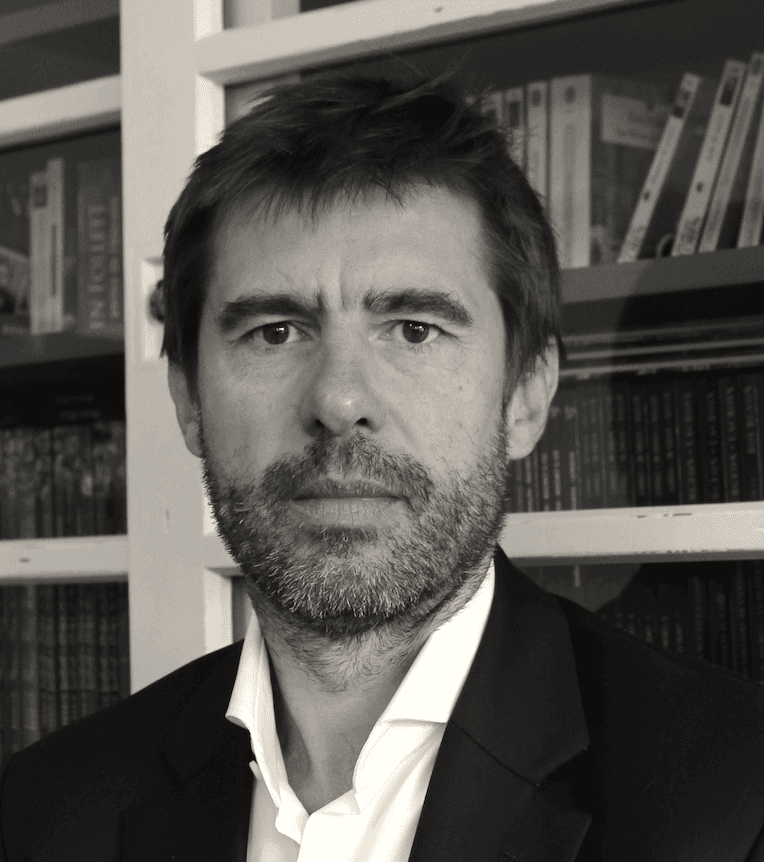
Crédit photo © Châteauform’
In few words
“Symbiotic leadership is the art of being in true harmony and co-development with our environment: giving meaning to who we are and meaning to what we do.”
A quest for meaning
Let’s start with the current situation. “We are on a mission!” declared Thomas Pesquet. His words push us to reflect on what it meant for half—maybe even more—of the planet to go into lockdown.
For each of us, confinement was first and foremost a response to a life-or-death challenge. Our mission was simple: help save lives. An individual commitment and a collective choice. In this extraordinary moment, we had no option but to engage.
Lockdown also forced us—sometimes willingly, sometimes not—to step back from our daily routines. Almost as if we were observing our planet from an orbital station. This distance invites us to draw lessons, anticipate what comes next, and rethink the future of our organisations.
This quest for meaning (or should we say, mission?) isn’t new. It strongly characterises Millennials, who recently entered the workforce. Their relationship to work and authority has deeply reshaped management dynamics and the conditions required for teams to engage fully—starting with their need to understand why they do what they do.
One of the consequences of this health crisis will likely be a renewed desire for meaning, amplified by the feelings of urgency and vulnerability we all experienced. What is the meaning of globalisation? Of economic competitiveness when it leads to choices that damage the planet? Of a capitalist system that protects only a privileged few?
Humanity is a systemic, interdependent whole.
The entrepreneurs’ perspective
Entrepreneurs—whatever the context they operate in—are engaged by nature. Always mobilised by challenges (if not missions), they are experts at transforming convictions into competitive advantages, placing their intentions at the service of performance and results.
Many contribute to the broader collective good, yet their awareness of environmental impact varies widely.
Fortunately, a growing number have embraced CSR, seeking to position their company within a global mission of balance with the planet’s ecosystem. Is this an answer to the quest for meaning? Perhaps. But CSR often relies on norms and processes—useful, yet insufficient to truly motivate teams.
A symbiotic approach
In the “post-crisis” world, managers will have to meet new expectations and maintain coherence between the company environment and the social environment (remote work, social life, community needs).
A symbiotic approach—holistic, integrated, forward-looking—can illuminate how we act, behave, and respond to new sanitary and societal challenges.
The future may bring repeated crises that push us to rethink our economic models and management practices. Several deep transformations are already emerging:
- A transformation of governance : parity, transparency, pay equity, environmental impact: non-negotiable pillars.
- A transformation of leadership : more foresight. More vision. More commitment to social and environmental responsibility. A shift toward “servant leadership,” where leaders become coaches of human development.
- A transformation of activities : paperless workflows, energy savings, resource preservation. Digitalisation and relocalisation as strategic responses: producing where we consume.
- A cultural transformation : a shift in society, impacting both collaborators and clients. New expectations that will reshape professions themselves: more customer-oriented, more eco-responsible, more focused on execution than expertise alone.
How do we anticipate and integrate these changes? How do we move beyond traditional managerial postures and reconnect with the deeper purpose of our actions? What evolution will tomorrow demand for a management style aligned with the future of entrepreneurship?
A symbiotic approach opens the path. It invites us to ask the essential questions emerging from today’s crisis and rethink the managerial paradigm—starting with the individual.
The individual level :
- Cultivating inner balance : develop wakefulness, sensory intelligence, openness to others and the world—while asserting oneself with clarity and coherence.
- Embracing the unknown : accept uncertainty. Dare to be surprised. Dare to let go. This transforms our relationship to control and risk. How can we intellectually and psychologically balance control and letting go so they become complementary?
- Shaping a vision for the future : even uncertain, a vision must become an ambition that mobilises. This requires identifying weak signals, anticipating tomorrow’s needs, and integrating all dimensions of the system: structure, processes, activities, human capital.
The collective level :
- Developing collective intelligence : complementary roles within teams. Relational skills, mobility and cross-functionality within organisations.
- Reinventing leadership : leadership that fosters autonomy, responsibility, and shared societal awareness.
A leader’s thinking is circular, complex, surprising—and constantly challenged by others. Fears, aspirations, and perceptions shape the team, a living and breathing organism.
As Vincent Lenhardt once said: “The leader carries meaning.” Today, we co-create that meaning with the team.
Symbiotic balance sits at the heart of managerial dynamics. Rethinking the managerial paradigm isn’t about writing new commandments—it’s an invitation to walk a path of human demandingness: acting with global awareness, seeing the world as an intricate system, becoming the butterfly of the now-famous systemic effect.
New forms of learning
Are these new skills? New behaviours managers must embody? Without a doubt. These challenges will quickly reshape management methods, inviting a deeper awareness of the managerial role and new learning paths focused on essential competencies.
A powerful way to raise managers’ awareness and help them become leaders—true “carriers of meaning”—is to question the four layers of personal identity:
- First level: visible behaviors that express the person's expertise and interpersonal skills. Am I competent and effective at leading teams? What tools do I use to manage? How do I use them on a daily basis?
- Second level: motivation, commitment, and intention in relation to the environment. Am I able to achieve objectives with discernment? How do I engage my teams? What are the goals? What drives me?
- Third level: projecting oneself and one's actions in time and space, through a systemic analysis and awareness of entrepreneurial issues. How aware am I of the impact of activities on the environment in the CSR sense of the term? What is my vision of my activities on the evolution of the world? What meaning do I give to my actions?
- Fourth level: life plan, individual values, reason for being and existing. What leads me to be a manager/leader? What mark do I want to leave? What does it mean to succeed in life?
To ensure long-term performance, companies must equip managers with new tools and support them in developing holistic capabilities. Recent events—social, health-related, economic—push us to rethink management and envision a new kind of leader: the symbiotic manager.
The humanist company in symbiosis
The philosophy of Jacques Horovitz, co-founder of Châteauform’, already carried this ambition. The humanist company—centred on the Human—now evolves toward a broader mission: our collective impact on Earth.
To be in symbiosis is to engage in win-win co-development while respecting the planet’s natural rhythm. It’s not enough to admire Earth from space. We must also protect it from our own frenetic activity.
Let’s support our managers in becoming true “carriers of meaning,” as Vincent Lenhardt describes so powerfully—leaders in harmony with their environment.
Jean-François Marvaud
Notes: (1) The humanist company is based on values, not obedience. Its purpose and values are explicit. Collective intelligence is central. Leaders act as servant leaders, supporting their teams starting with the CEO.
Find the ideal venue for your event !
FAQ – Organising a Corporate Seminar with Châteauform’
Who is Châteauform’?
For over 25 years, Châteauform’ has been the specialist in hosting corporate seminars and business events. Our venues – country houses, châteaux, and elegant town mansions – are entirely dedicated to companies and designed to foster teamwork, conviviality, and creativity.
What makes a Châteauform’ seminar unique?
With us, everything is included and designed to make your life easier: fully equipped meeting rooms, comfortable accommodation, friendly dining, engaging activities, and the warm support of a dedicated host couple. You focus on your teams – we take care of the rest.
What does “all-inclusive” mean?
Our all-inclusive package covers accommodation, meals, gourmet coffee breaks, fully equipped meeting rooms, technical equipment, and personalised support. There are no hidden costs – everything is included from the start.
What types of seminars and events can we organise with Châteauform’?
Study days
Residential seminars (with overnight stay)
Executive committees
Training sessions and workshops
Festive events (cocktail receptions, dinners, team evenings)
How much does a Châteauform’ seminar cost?
Our prices depend on the venue, the number of participants, and the duration of your stay. The all-inclusive formula makes it easy to manage your budget – on average, expect between €290 and €400 (excl. VAT) per participant for a 24-hour residential seminar.
Where are Châteauform’ venues located?
Our houses are located across France and Europe – including Germany, Belgium, Spain, the Netherlands, Italy, and Switzerland. Whether it’s a château in the countryside or a town mansion near a major city, each venue is designed to host your corporate events in an inspiring setting, close to urban centres or surrounded by nature.
How can we book a seminar with Châteauform’?
Simply get in touch in the way that suits you best: fill in our online form, call us directly, chat via WhatsApp, arrange a meeting with one of our advisers, or send us an email.
Can we organise a tailor-made seminar?
Of course. Every seminar is built around your objectives. From meeting formats to dining and activities, we tailor every detail to reflect your expectations and your company culture.
What kind of activities can we include during a seminar?
Our country and city venues offer a wide range of activities: team-building workshops, sports sessions, ice-breakers, creative and cultural experiences, and festive evening events. Activities are adapted to your goals, your team, and the season.
Why choose Châteauform’ rather than a traditional hotel?
Because everything is designed with you in mind. Our venues are fully dedicated to corporate seminars, with purpose-built meeting spaces, exceptional dining, personalised support, and an all-inclusive package with no hidden fees. You enjoy simple, stress-free organisation and a setting that encourages both productivity and connection.