How to Develop Leadership in the Workplace
Julie Dehloum
on 28 November 2025
Reading 5 min.
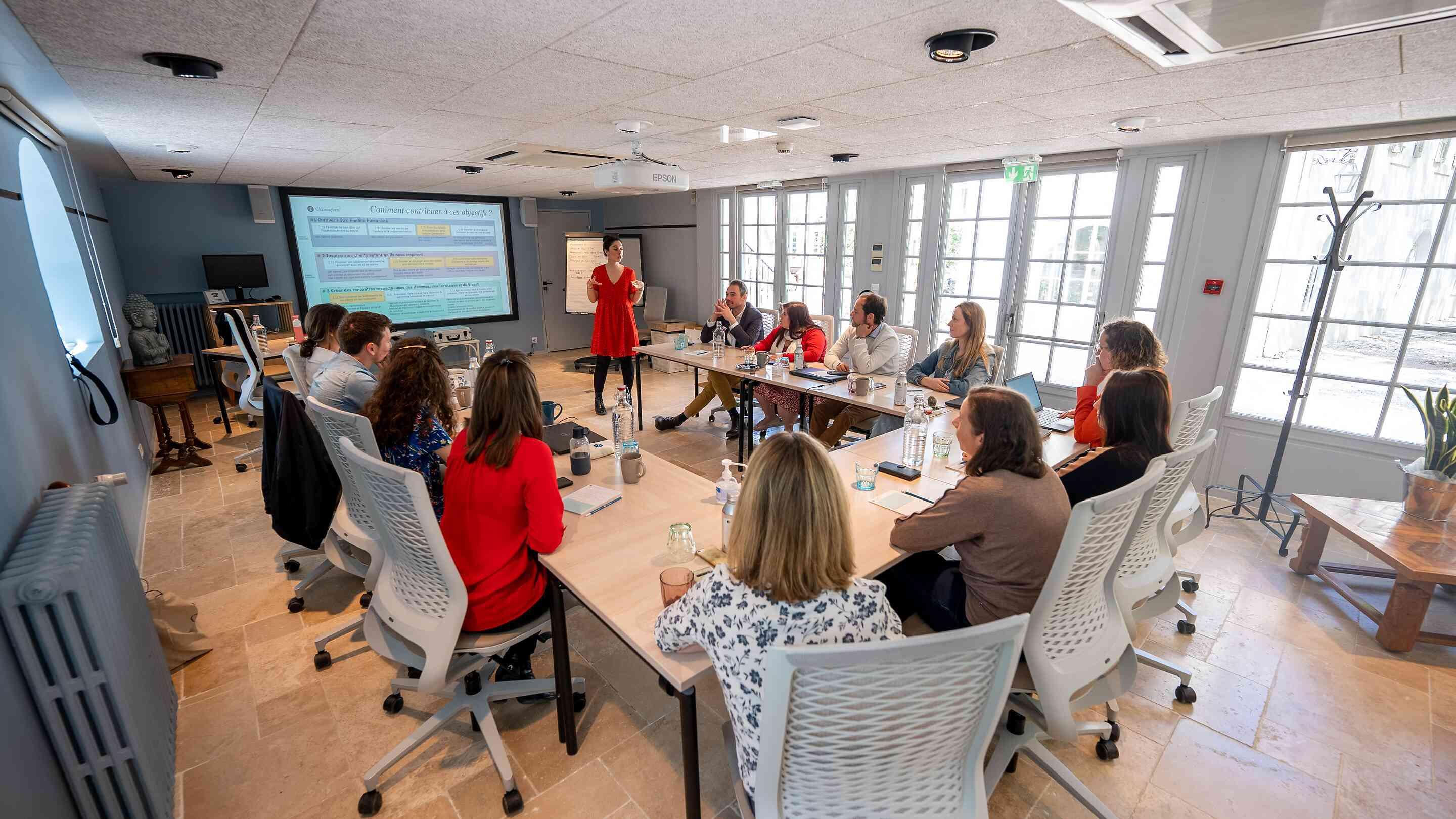
Crédit photo © Châteauform’
In few words
Leadership sits at the heart of every company’s success. It’s the backbone that aligns individuals and teams around shared goals. A strong leader sparks innovation and creates an environment where people can grow. Inspiring leaders shape a compelling vision and help each team member unlock their full potential. They know how to keep motivation high – even when the context gets tough.
What is leadership?
Leadership is the ability to influence and guide individuals or teams towards shared objectives. It’s a dynamic process: inspiring, motivating, coordinating efforts and driving results that really make a difference. Over time, the concept of leadership has evolved, giving rise to different approaches and styles. Understanding these various leadership models offers multiple ways to lead effectively. It helps leaders adapt to specific contexts and develop versatile skills to face challenges with clarity and confidence.
Exploring leadership strategies
There are several well-known leadership styles that have proven effective in different situations. Here are some of the best-known:
- Transformational leadership
Transformational leaders inspire their teams and help them reach their full potential. They encourage innovation, creativity and long-term thinking. They are charismatic, energising and build an emotional connection with their teams.
- Transactional leadership
Transactional leadership is based on a system of rewards and consequences linked to performance. These leaders set clear goals and reward results. They can also enforce consequences when expectations are not met.
- Participative leadership
Participative leaders make decisions in collaboration with the team. They encourage idea sharing and open communication. Collective decision-making can significantly boost motivation and engagement.
- Authoritarian leadership
Also known as autocratic leadership, this style is based on the leader making decisions alone, without consulting the team. It can be efficient in emergencies or when rapid decisions are needed, but it may curb creativity and initiative.
- Servant leadership
Servant leaders focus on meeting the needs of their teams and fostering personal development. They are attentive, supportive and committed to helping others succeed.
- Situational leadership
Situational leaders adapt their style to the changing needs of the team and the context. They assess each person’s level of skills and motivation, then adjust their way of leading accordingly.
- Charismatic leadership
Charismatic leadership relies on the leader’s personality and presence to inspire and influence others. These leaders are often visionary, passionate and capable of rallying teams around shared ambitions.
- Visionary leadership
Visionary leaders have a strong capacity to articulate a compelling picture of the future. Their goal: inspire others to work together to bring this vision to life.
- Democratic leadership
Democratic leaders promote collective decision-making and shared responsibility. They consult their teams before making important decisions.
- Laissez-faire leadership
In this style, leaders give a high degree of autonomy to the team. People are free to make decisions and organise their work. It is well-suited to highly experienced, independent teams.
Each leadership style comes with its strengths and its limits. The right approach depends on the context, company culture, team skills and objectives. Many leaders combine several styles and switch from one to another depending on the situation.
How to develop leadership in the workplace?
10 management & leadership tips
Leadership is not fixed at birth. It can be nurtured, strengthened and refined over time. Here are a few key steps to grow your leadership skills:
1. Start with honest self-assessment
Take a clear look at yourself to identify your strengths and areas for improvement as a leader. Stay open to feedback and try to understand how others perceive your way of leading.
2. Set clear goals
Identify the specific leadership skills you want to develop. Set realistic, measurable goals to track your progress and keep yourself accountable.
3. Strengthen your communication skills
Communication is a core leadership tool. Work on active listening, verbal and non-verbal communication, and learn to express your ideas and expectations clearly and confidently.
4. Develop your emotional intelligence
Effective leaders have strong emotional intelligence. They are aware of their own emotions and those of others, and know how to manage them in a constructive way.
5. Learn to inspire and motivate
Cultivate your ability to inspire and energise your team. Lead by example, show consistent commitment to the team’s goals and celebrate progress along the way.
6. Practice empathy
Take the time to understand your team members’ needs and perspectives. Be attentive to their concerns and show them that their well-being really matters to you.
7. Stay a learning leader
Leadership is a continuous learning journey. Keep an open mind, read about leadership, attend training sessions or conferences, and get inspired by other leaders and best practices.
8. Take on responsibility
Look for opportunities to step into leadership roles and take initiative – at work, in cross-functional projects, in associations or volunteer work. Leadership grows through action.
9. Ask for feedback regularly
Invite constructive feedback on your leadership. These insights will help you spot blind spots and refine your approach.
10. Surround yourself with mentors
Seek out mentors or experienced leaders. Their advice, support and experience can accelerate your development and help you navigate complex situations. And above all: be persistent. Developing leadership takes time and effort. Stay the course, even when you encounter setbacks or challenges.
By continuously working on your leadership skills and choosing a thoughtful, authentic approach, you can become a more impactful and influential leader. Remember: leadership is a journey of continuous improvement – no one becomes an exceptional leader overnight.
Now it’s your turn
Leadership is constantly evolving. When leaders grow and develop their soft skills, they create a powerful ripple effect. Their teams benefit first, and in turn contribute more strongly to the company’s growth and success.
This dynamic of continuous evolution nurtures a thriving company culture, stronger talent retention and a greater ability to face future challenges. By embracing this vision of ever-evolving leadership, leaders can truly become catalysts for positive change – for themselves, their teams and their organisation.
Time to build the future, one leadership step at a time.
FAQ – Organising a Corporate Seminar with Châteauform’
Who is Châteauform’?
For over 25 years, Châteauform’ has been the specialist in hosting corporate seminars and business events. Our venues – country houses, châteaux, and elegant town mansions – are entirely dedicated to companies and designed to foster teamwork, conviviality, and creativity.
What makes a Châteauform’ seminar unique?
With us, everything is included and designed to make your life easier: fully equipped meeting rooms, comfortable accommodation, friendly dining, engaging activities, and the warm support of a dedicated host couple. You focus on your teams – we take care of the rest.
What does “all-inclusive” mean?
Our all-inclusive package covers accommodation, meals, gourmet coffee breaks, fully equipped meeting rooms, technical equipment, and personalised support. There are no hidden costs – everything is included from the start.
What types of seminars and events can we organise with Châteauform’?
- Study days
- Residential seminars (with overnight stay)
- Executive committees
- Training sessions and workshops
- Festive events (cocktail receptions, dinners, team evenings)
How much does a Châteauform’ seminar cost?
Our prices depend on the venue, the number of participants, and the duration of your stay. The all-inclusive formula makes it easy to manage your budget – on average, expect between €290 and €400 (excl. VAT) per participant for a 24-hour residential seminar.
Where are Châteauform’ venues located?
Our houses are located across France and Europe – including Germany, Belgium, Spain, the Netherlands, Italy, and Switzerland. Whether it’s a château in the countryside or a town mansion near a major city, each venue is designed to host your corporate events in an inspiring setting, close to urban centres or surrounded by nature.
How can we book a seminar with Châteauform’?
Simply get in touch in the way that suits you best: fill in our online form, call us directly, chat via WhatsApp, arrange a meeting with one of our advisers, or send us an email.
Can we organise a tailor-made seminar?
Of course. Every seminar is built around your objectives. From meeting formats to dining and activities, we tailor every detail to reflect your expectations and your company culture.
What kind of activities can we include during a seminar?
Our country and city venues offer a wide range of activities: team-building workshops, sports sessions, ice-breakers, creative and cultural experiences, and festive evening events. Activities are adapted to your goals, your team, and the season.
Why choose Châteauform’ rather than a traditional hotel?
Because everything is designed with you in mind. Our venues are fully dedicated to corporate seminars, with purpose-built meeting spaces, exceptional dining, personalised support, and an all-inclusive package with no hidden fees. You enjoy simple, stress-free organisation and a setting that encourages both productivity and connection.